


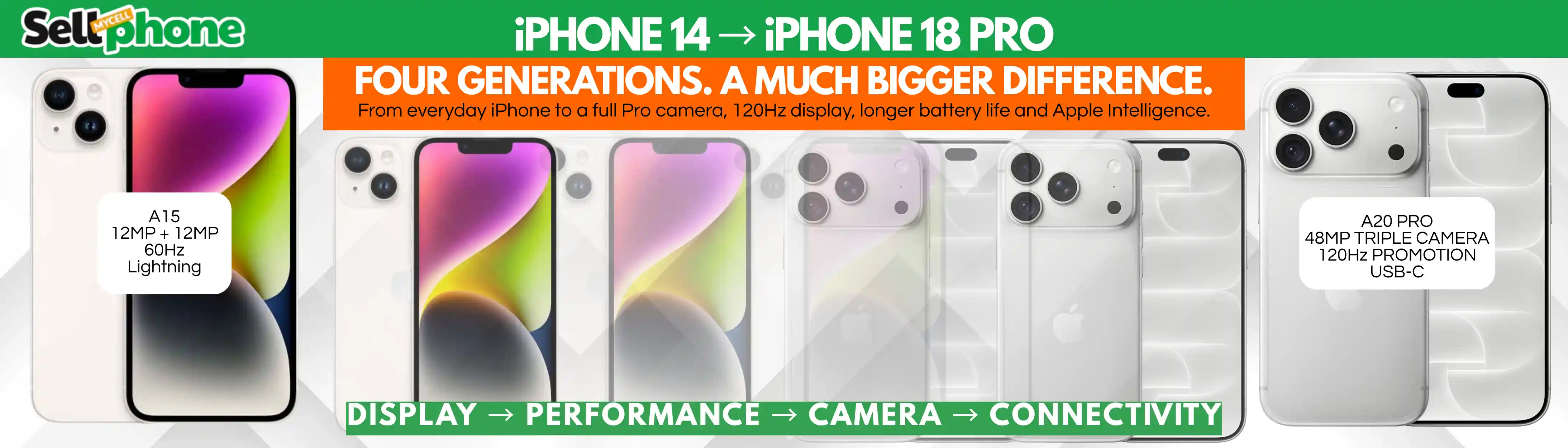
The iPhone 14 launched in 2022 with the A15 Bionic chip, two 12MP cameras and a Lightning port. The iPhone 18 Pro, four generations newer, brings the A20 Pro chip, a triple 48MP camera system with variable aperture, USB-C and full Apple Intelligence support.
But bigger numbers don't automatically mean a better experience for everyone. Here's what actually changes when you upgrade, and who benefits most.
iPhone 14 vs iPhone 18 Pro: Quick comparison
| Feature | iPhone 14 | iPhone 18 Pro |
|---|---|---|
| Release year | 2022 | 2026 |
| Chip | A15 Bionic | A20 Pro |
| Main camera | 12MP | 48MP variable aperture |
| Ultra Wide | 12MP | 48MP |
| Telephoto | No dedicated telephoto | 48MP 4x Telephoto |
| Front camera | 12MP | 18MP Center Stage |
| Apple Intelligence | No | Yes |
| Port | Lightning | USB-C |
| Pro camera controls | No | Yes |
iPhone 14 vs iPhone 18 Pro Display: The difference you notice first
The display is the upgrade you notice within seconds of picking up the iPhone 18 Pro.
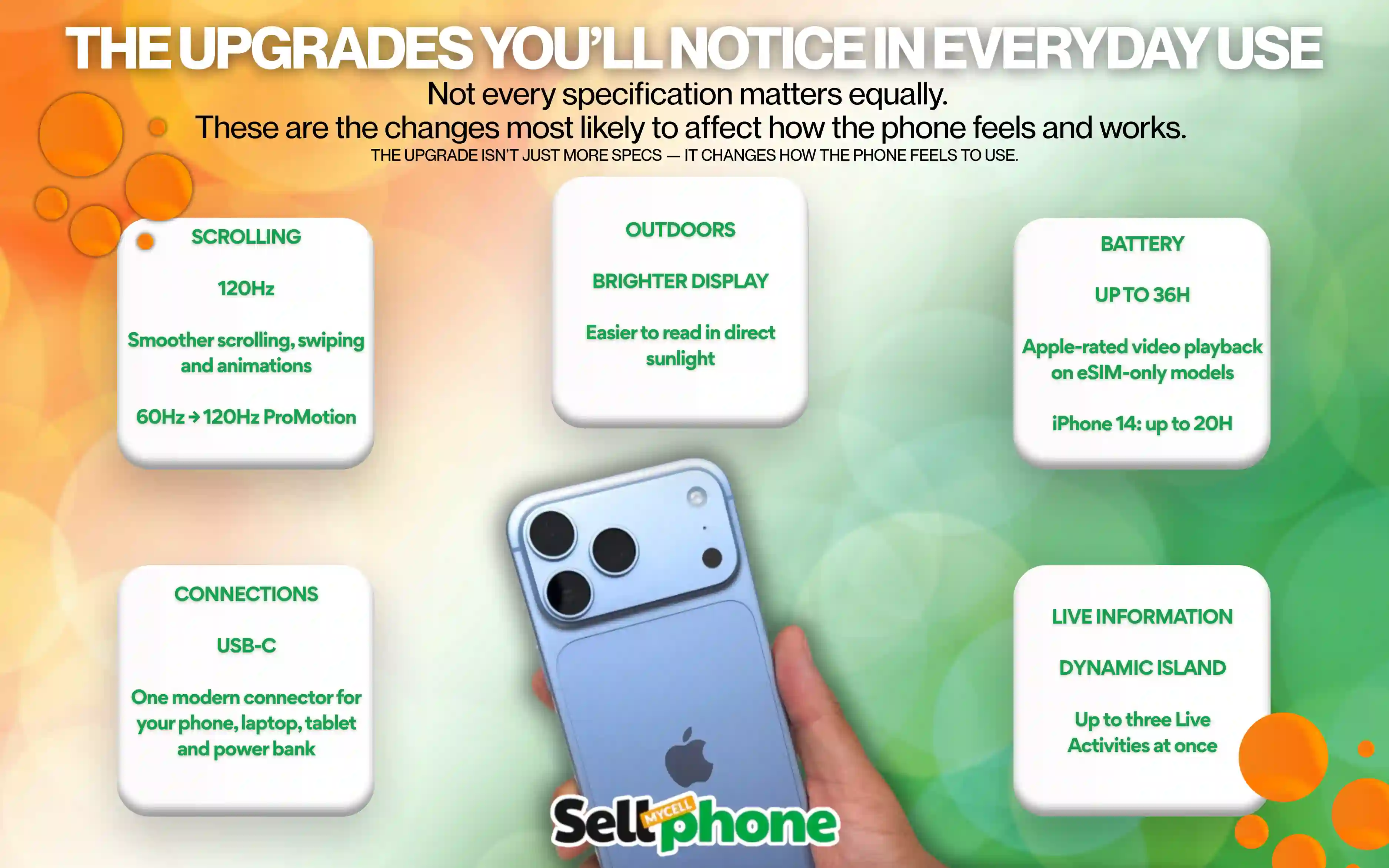
The iPhone 14 has a 6.1-inch OLED screen that refreshes at 60Hz, with a notch at the top. The 18 Pro steps up to a slightly larger 6.3-inch display with ProMotion, which refreshes at up to 120Hz. Scrolling, swiping and animations look noticeably smoother, and once you get used to it, going back to 60Hz feels sluggish.
The notch is replaced by a smaller Dynamic Island, which now shows up to three Live Activities at once, such as a timer, a delivery update and your music, without leaving the app you are using. The 18 Pro also has an Always-On display, so you can check the time and notifications without waking the phone.
Brightness is a practical upgrade too. The 18 Pro's screen gets much brighter outdoors, which makes it far easier to read in direct sunlight than the iPhone 14.
iPhone 14 vs iPhone 18 Pro Performance: Four years of chip development
The iPhone 14 uses the old but reliable A15 Bionic chip. It was a powerful processor when the phone launched, and it remains capable of easily everyday tasks such as messaging, social media, streaming, photography and even gaming.
The iPhone 18 Pro uses the A20 Pro, and the difference shows up in how the phone handles pressure. Games run smoother for longer, video exports finish faster, and the phone is less likely to heat up and slow down during long sessions, thanks to a redesigned cooling system built around the chip. The A20 Pro is also more power efficient, which feeds directly into the 18 Pro's longer battery life.
For someone who only uses their phone for basic tasks and light gaming, the difference will probably not feel dramatic every second of the day. But the gap becomes more obvious with demanding games, video editing, AI features and other workloads that can push the hardware harder. The newer chip also gives the iPhone 18 Pro more room to handle future software features.
iPhone 14 vs iPhone 18 Pro Camera: From two 12MP cameras to a 48MP Pro system
The camera is one of the biggest differences between these phones.
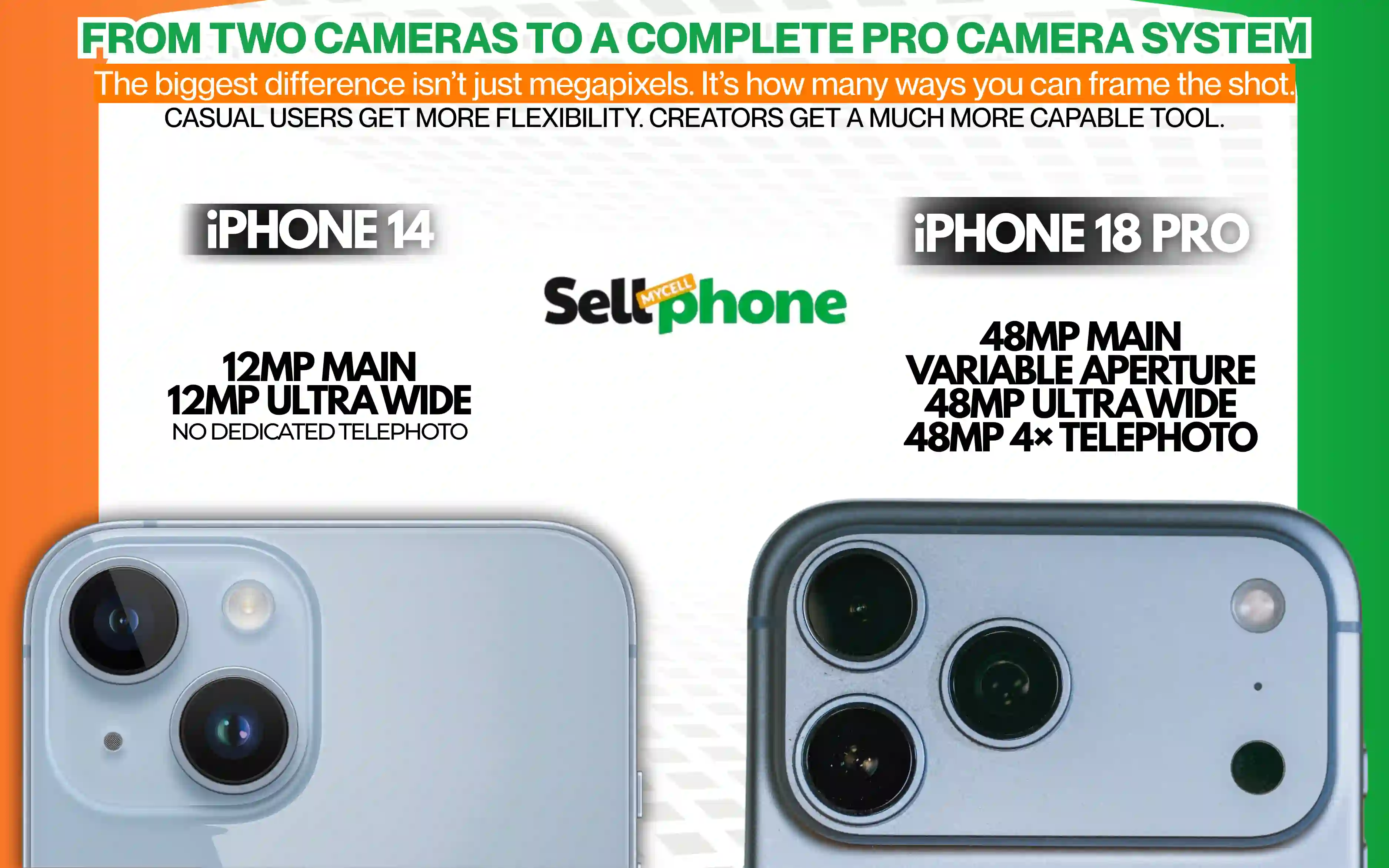
The iPhone 14 has a 12MP Main camera and a 12MP Ultra Wide camera. It does not have a dedicated telephoto camera, so zooming beyond its native range relies more heavily on digital processing.
Upgrading to iPhone 18 Pro moves you to a 48MP Pro Fusion camera system. The main 48 MP camera is a much bigger sensor (1/1.7-inch on iPhone 14 vs 1/1.28-inch on the 18 Pro) and has variable aperture, while the Ultra Wide camera is also 48MP. There is also a dedicated 48MP 4x Telephoto camera with an 8x optical-quality zoom option.
That sounds like a specification-heavy upgrade, but the practical difference is simple: you have more ways to frame a shot.
You can shoot wide, get closer to distant subjects, capture more detail and have greater control over how the image looks. Beyond the added versatility, the sheer increase in sensor size means better overall photos and videos especially in low light. The variable aperture gives the 18 Pro more control over light and depth of field. It adjusts automatically for most shots, while creators can manually choose from four aperture settings.
Video gets a similar boost. The larger sensor and dedicated telephoto give you cleaner low-light footage and more framing options, and Cinematic depth effects can now be applied after recording in 4K Dolby Vision at up to 60fps. The iPhone 14 supports Cinematic mode too, but at 4K 30fps.
And yes, even casual users will notice the difference in everyday shots, especially at night and when zooming. Creators get the bigger payoff: manual controls, a real telephoto and more flexible video make the 18 Pro a far more capable tool.
iPhone 14 vs iPhone 18 Pro Battery life
Battery life is one of the most noticeable upgrades, especially for iPhone 14 owners. After four years of charging cycles, most iPhone 14 batteries hold noticeably less charge than they did at launch, so many owners are already reaching for a charger by mid-afternoon.
On paper, Apple rates the iPhone 14 for up to 20 hours of video playback and the iPhone 18 Pro for up to 36 hours on eSIM-only models (physical-SIM versions get around two hours less). Real-world results depend on how you use your phone, but the practical takeaway is clear: the 18 Pro can comfortably get most people through a full day of heavy use, with room to spare.
Charging is faster too. The iPhone 14 reaches 50% in about 30 minutes with a 20W adapter, while the 18 Pro gets there in around 15 minutes with a compatible USB-C charger. A quick top-up before heading out goes much further.
Apple Intelligence changes the equation
The iPhone 14 does not support Apple Intelligence while the iPhone 18 Pro was built from the ground up with Apple Intelligence in mind.
This matters because Apple Intelligence is not just another camera feature. It is built into parts of the operating system and apps, meaning newer supported hardware can access features that older iPhones cannot.
If you do not care about AI features, this difference may not matter much today.
If you plan to keep your phone for another few years, however, buying hardware that supports Apple's current AI platform gives you more room to benefit from future updates.
USB-C vs Lightning
The iPhone 14 uses a Lightning connector. The iPhone 18 Pro uses USB-C.
That change is practical rather than exciting, but it can make everyday life easier. If your laptop, tablet, power bank and other accessories already use USB-C, the iPhone 18 Pro means one less type of cable to keep around.
The iPhone 14's Lightning port still works, but USB-C is the newer standard and is the more convenient setup for someone buying a phone today.
Is the iPhone 18 Pro worth upgrading to from the iPhone 14?
The jump from iPhone 14 to iPhone 18 Pro is much more than a routine annual upgrade.
You are moving from A15 to A20 Pro, a dual 12MP camera system to a triple 48MP Pro system with dedicated telephoto, Lightning to USB-C, and a phone without Apple Intelligence to one built around Apple's current AI platform.
The iPhone 14 can still handle everyday tasks, so you do not need to upgrade simply because it is four years old.
But if you are already considering replacing it, the iPhone 18 Pro offers meaningful improvements in the areas you are most likely to notice: camera flexibility, battery life, performance, connectivity and newer software capabilities.
For an iPhone 14 owner who mainly wants basic smartphone functions, keeping the current phone can still make sense. For someone who wants a significant jump in what their iPhone can actually do, the iPhone 18 Pro represents a much larger change than the generation number alone suggests.
What to do with your iPhone 14 after upgrading
The simple answer is to sell your iPhone 14 for cash. An iPhone 14 still has real resale value, and selling it quickly helps offset the 18 Pro's price (especially after the hike), since values drop steadily as newer models release. SellMyCellPhone is the best place to sell your iPhone 14 if you want a great cash offer without the hassle of eBay and other marketplaces.
In a side-by-side comparison against major buyback platforms, SellMyCellPhone paid 30% more on average, and trade-in programs typically pay less than selling for cash.
The process is straightforward: get a quote based on your iPhone 14's storage, carrier and condition, ship it free with a prepaid label, and get paid once it arrives and is checked. Your quote is also price-locked, so it will not drop while your phone is in transit.
Before you send it off, take a few minutes to prepare it:
- Back up your data. Use iCloud or your computer so everything transfers to your new iPhone 18 Pro.
- Turn off Find My. Go to Settings > [your name] > Find My > Find My iPhone and switch it off. A phone with Activation Lock still on cannot be resold.
- Erase the phone. Go to Settings > General > Transfer or Reset iPhone > Erase All Content and Settings.
- Remove your SIM. UK models have a physical SIM tray. US iPhone 14 models are eSIM-only, so make sure your eSIM has moved to your new phone.
Even a cracked or worn iPhone 14 can still be sold, so condition should not stop you from getting cash for it.
Final words
The iPhone 18 Pro is four generations ahead of the iPhone 14, and the gap shows in the areas you use most: a smoother, brighter display, a far more capable camera, longer battery life and Apple Intelligence support.
That said, the iPhone 14 is still a capable phone. If it handles your daily needs and the battery holds up, there's no rush to replace it. But if you're charging by mid-afternoon, want better photos at night or when zooming, or plan to keep your next phone for several years, the 18 Pro is a worthwhile upgrade.
If you do make the switch, sell your iPhone 14 while it still holds value. The cash you get back can take a meaningful chunk off the 18 Pro's price.